Works offline
Recording, separation and identification all happen on the station. Weeks without signal are fine.
Acoustic monitoring for bird research
We build field-ready microphone arrays and software that pull individual birds out of the dawn chorus, work out where each one is singing, and identify it right on the device.
The problem
At dawn in the tropics, dozens of species sing at the same time. Most recorders listen through a single microphone, so overlapping songs blur together and AI classifiers miss the quieter voices.
Microphone arrays that can separate voices already exist, but they're tuned for people in meeting rooms. Songbirds sing much higher than we speak, often above the range those arrays were built for.
We're building the array, the separation model, and the software for birds.
How it works
Eight microphones record the forest together. A song reaches each one a fraction of a millisecond apart, and that tiny difference gives away its direction.
Our model finds each singer's bearing, then pulls its voice out of the mix. Each bird gets its own clean recording, tagged with the direction it came from.
Google's Perch 2.0 model names the species on the device, narrowed to what's likely for your location and season. A local model learns from the calls you confirm.
A live dashboard shows who's singing, when, and from where. It runs on the device in the field and in the cloud when you're back home.
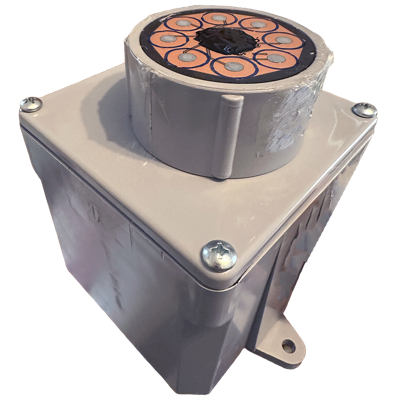
01 · The array
Eight MEMS microphones sit in a small ring, spaced so the array can tell apart birds singing from different directions, even at songbird pitch.
02 · Source separation
Many separation models are asked to untangle a recording on their own. In real forests they tend to give up and simply turn the volume down. We take a different route.
Because the network starts from the classical result, it can only improve on it. It is trained on real recordings from our field site and small enough to run on the device.
03 · Edge & cloud
Each station records, separates and identifies birds on its own, with no internet required. When a connection is available, it syncs to the cloud so you can follow every site from anywhere.
Recent detections ▶ tap to listen
Where they're singing
Activity today ☀ sunrise 05:52
Real detections from our Santa Marta station, with the direction each bird sang from. Click one to listen.
Recording, separation and identification all happen on the station. Weeks without signal are fine.
Confirm or correct a detection and a local model learns from it, picking up regional dialects and ignoring familiar noise.
Suggestions are filtered by where the station is and the week of the year, so unlikely species don't slip in.
Unknown calls are grouped by similarity, so you can label a whole cluster at once instead of clip by clip.
Hourly heatmaps with sunrise, sunset and weather, plus compass charts of where each species sings.
The same interface runs on the station and in the cloud, with secure live listening and multi-site accounts.
In the field
Our prototype lives in a remote corner of the Sierra Nevada de Santa Marta in northern Colombia, one of the most bird-rich mountain ranges on Earth. It faces heavy rain, high humidity and strong sun every day.
Dawn there brings dozens of species singing at once. That makes it a tough place to work and the right place to train and test our separation model on real recordings.
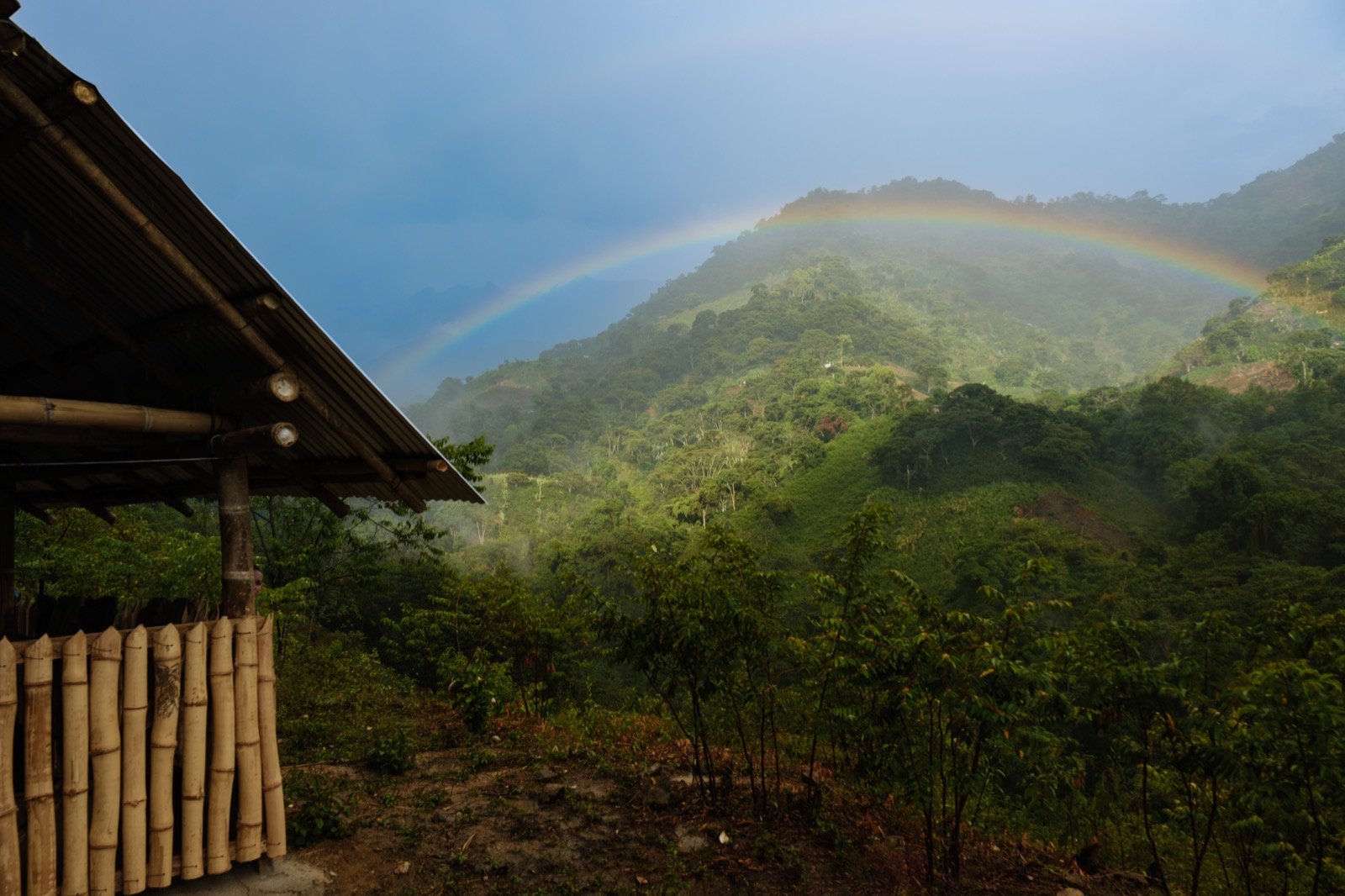
Prototype array deployed
Recording daily in the Santa Marta mountains.
Edge & cloud platform
Live detections, review tools and cloud sync running on Raspberry Pi 5.
Separation model
Trained on real field recordings and being tuned to run in real time.
Next-gen hardware
A board with a neural accelerator for full-quality separation on the device.
Research availability
Projected for late 2027.
Neighbours
Photos marked with play a real recording of that species, captured and identified by our station in Santa Marta.
Stay in the loop
We share field notes, results and hardware news a few times a year. Researchers and conservation teams interested in early deployments are welcome to leave a note.